
Free delivery on every print and canvas

Materials & sizes

What the object
is actually made of.

A portrait is worth hanging only if the thing it is printed on is worth hanging. Here is the full specification — the canvas weight, the wood, the paper, the inks and the three sizes — written out so you can compare it against anything else you are considering.

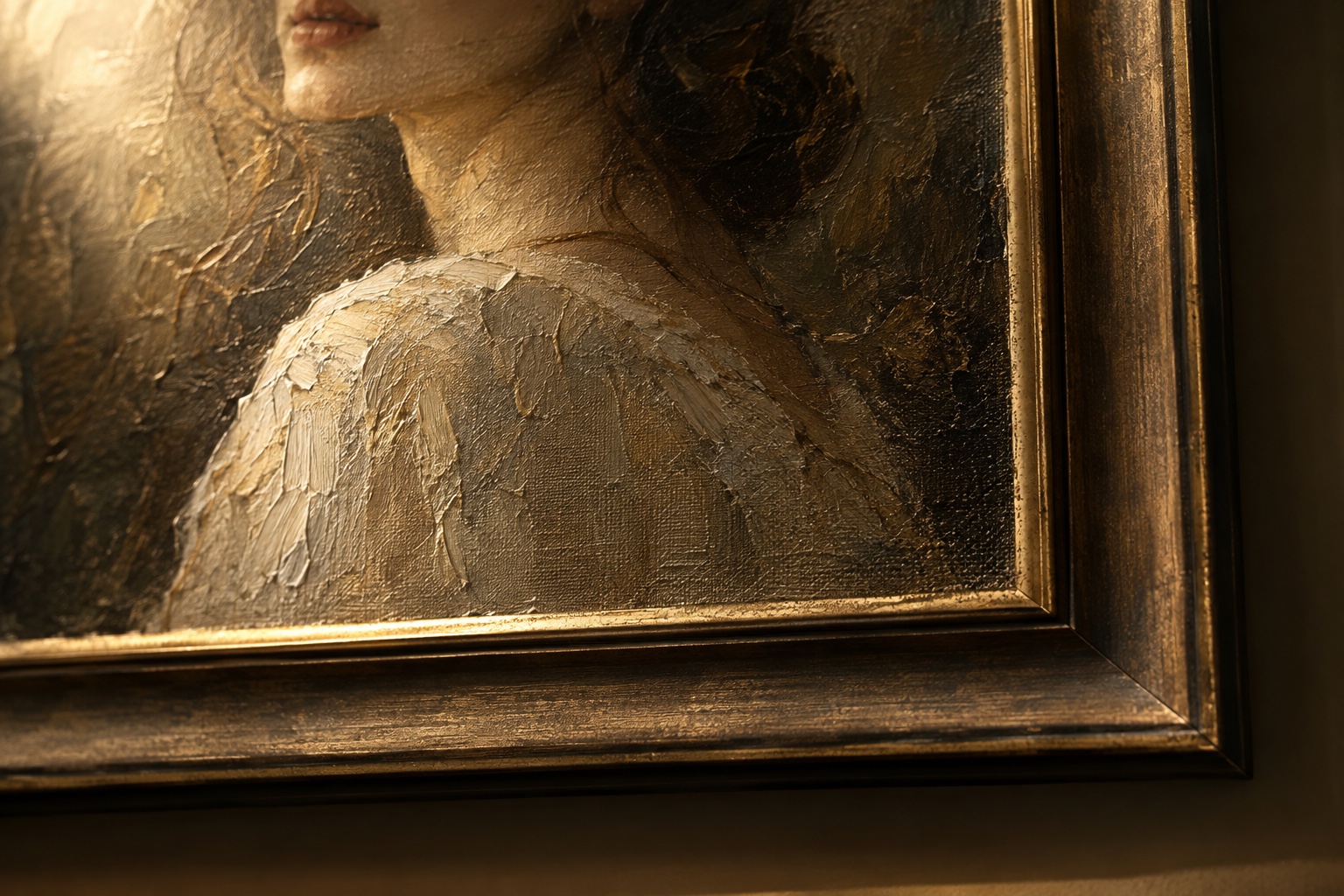
Close detail of canvas weave meeting a wood frame edge
A portrait painted across a visible cotton-blend canvas weave

300–350 gsm cotton blend

Canvas

A cotton-blend canvas between 300 and 350 gsm — heavy enough to hold tension over the bars for years without slackening, and woven finely enough that the weave supports the brushwork rather than competing with it.

The surface has a low sheen. Under a lamp it behaves the way a varnished painting behaves: the light sits in it instead of bouncing off it, which is the difference between a canvas that reads as a painted object and one that reads as a photograph on fabric.
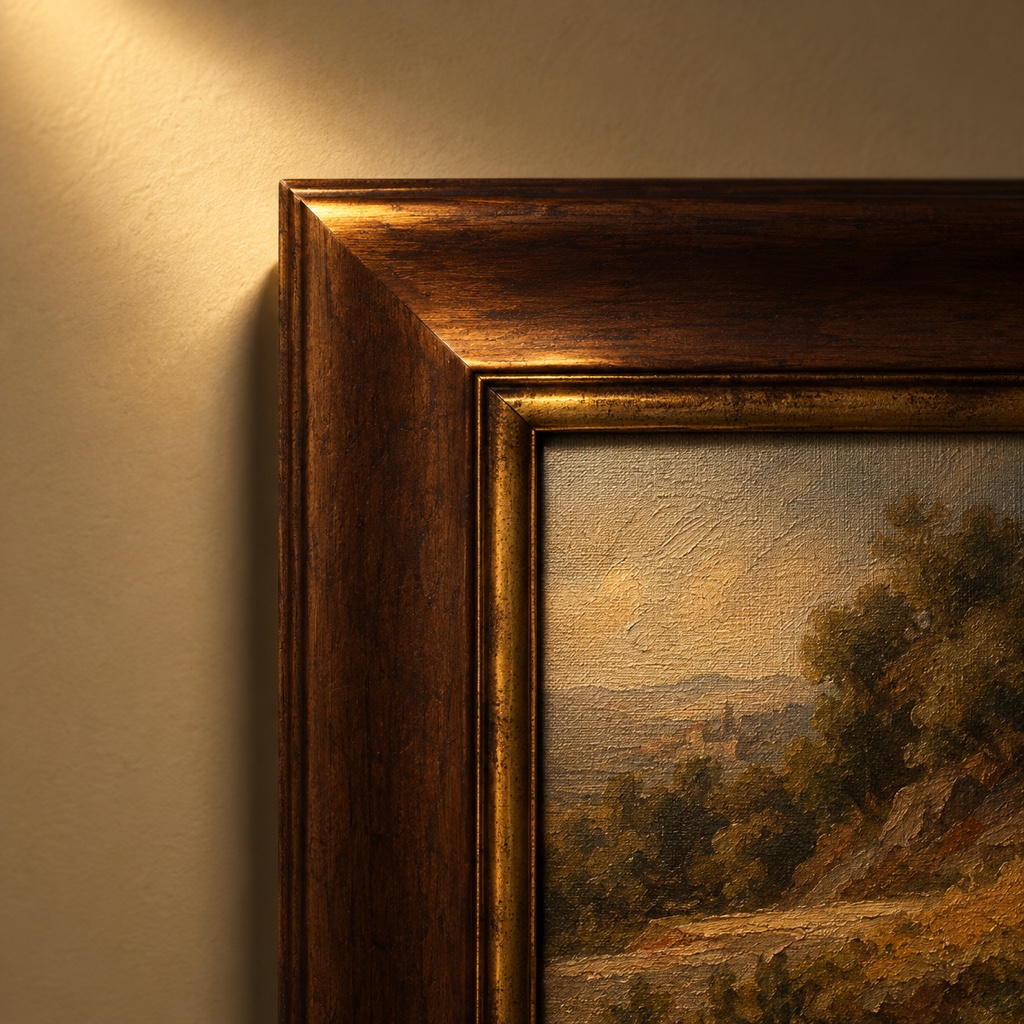

Corner detail of a wooden picture frame

Solid poplar or pine, floater profile

Stretcher bars and frame

Canvases are stretched over solid kiln-dried wooden bars, not hollow board. The image wraps the sides, so an unframed canvas still looks finished from an angle.

The framed version sets that canvas into a real wood floater frame — poplar or pine depending on the studio and the size — with a deliberate shadow gap between canvas edge and moulding. Every frame ships with a hanging kit fitted, so there is nothing to buy and nothing to measure once it arrives.

Close view of textured fine art paper

Heavyweight matte, slight tooth

Fine art paper

Prints are made on a heavyweight matte art paper with a slight tooth. Matte rather than gloss is a deliberate choice for this kind of work: gloss throws reflections across a dark ground and flattens the depth the style depends on.

Paper prints are the right choice when you already know the frame you want, or when the piece is going somewhere a canvas would be too informal — a study, a stairwell of matched black frames, a group of smaller works hung together.

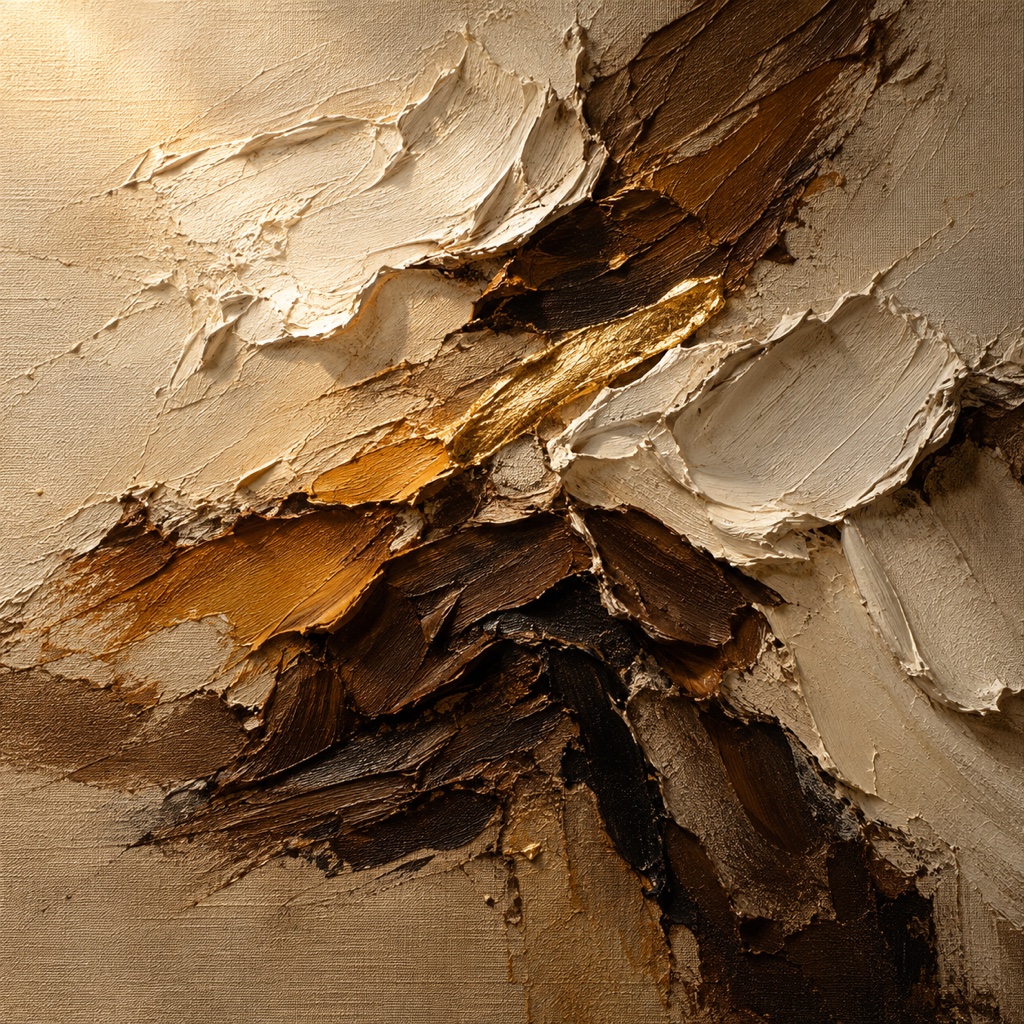
Close view of thick oil-style paint texture

Archival pigment, not dye

Inks

Archival pigment inks, on both paper and canvas. Pigment rather than dye is what separates a print that still looks like itself in twenty years from one that has drifted pink by the time it is five.

Keep any print out of direct, unbroken sunlight and it will hold. That is true of every pigment print and of most real paintings, and it is the only care instruction worth giving.

Sizes

Three sizes, and how to choose

The most common regret is going one size too small. A portrait is a subject with a face in it, and a face needs room before it carries a wall. If you are between two sizes, the larger one is almost always the one you meant.

12" × 16"

30 × 40 cm

A desk, a shelf, a narrow hallway, or one panel in a grid of several portraits.

Reads well from about one to two metres away.

Available in every region we print from.

18" × 24"

45 × 60 cm

The size most people choose. Holds a wall above a console table, a sideboard or a bed without crowding it.

Reads well from two to three metres.

Available in every region except where noted at checkout.

24" × 32"

60 × 80 cm

A statement above a fireplace or at the end of a corridor, where the portrait is meant to be the thing you see first.

Reads well from three metres and further.

Produced in the US, UK, EU and Canada. Australian orders at this size ship from further afield and take longer.

Measuring first

A two-minute check

Cut a rectangle of newspaper to the finished size and tape it where the portrait will hang. Step back to where you normally stand in that room — the doorway, the sofa, the other side of the kitchen — and look at it there rather than from an arm's length away. Almost everyone who does this ends up ordering a size up from where they started.

Two other rules are worth knowing. Hang the centre of the portrait at roughly 145 centimetres from the floor, which is where galleries put the centre line and where eyes naturally go. And above furniture, aim for a piece about two thirds the width of what sits beneath it — a 24 × 32 inch canvas over a standard sideboard, an 18 × 24 over a console or a bed's headboard, a 12 × 16 where it will be part of a group rather than the whole event.

Care

Keeping it right

Dust a canvas with a dry, soft cloth and nothing else — no sprays, no damp cloths, no glass cleaner. Keep both canvas and paper off walls that take direct midday sun and away from the top of a working fireplace or a radiator, where heat cycling does more damage over time than light does.

Canvases can slacken slightly in the first months in a very dry or very humid room. This is normal for stretched canvas and reverses on its own as conditions settle. If it does not, tell us — that is covered under remakes.

See yours on the material

Make the portrait first, free, and choose the size and the surface once you can see what you are sizing.